
 русский
 Français
 Español
 Deutsch
 عربى

Precision, Power, and Practical Design in a Modern Cordless Hair Clipper
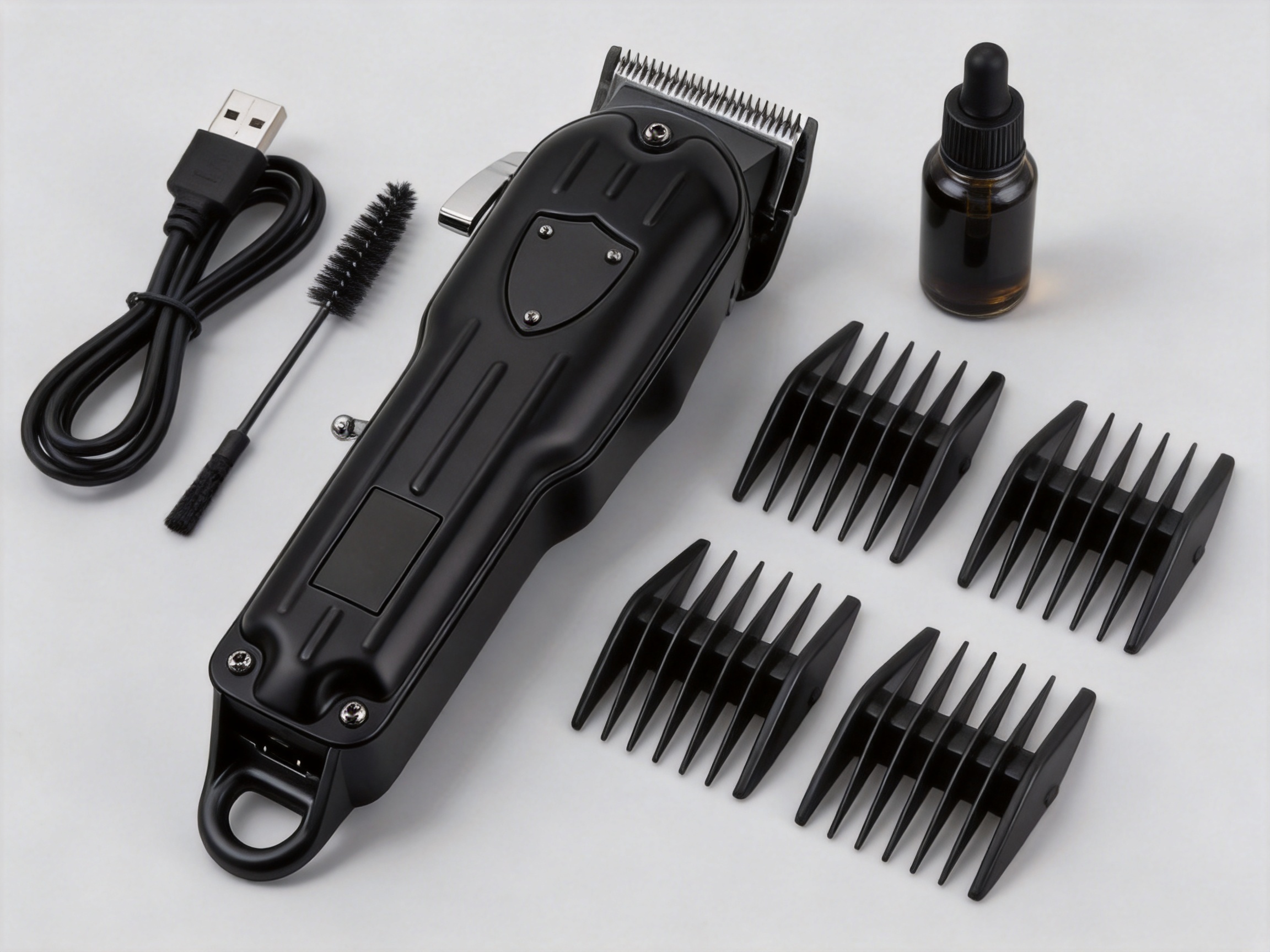
Choosing a professional-quality hair clipper involves more than comparing appearance and price. Users, retailers, barbers, and private-label brands increasingly look for a balanced combination of cutting precision, motor performance, battery endurance, charging convenience, accessory value, material reliability, and supply-chain support. The LT-1258 Precision Blade Hair Clipper has been developed around these practical requirements. It combines a powder metallurgy blade, a 7,200 RPM motor, a rechargeable 18650 battery platform, USB charging, multiple guide combs, and a compact ABS housing in one versatile grooming device.
The clipper is designed for hair trimming and detail work, while its supplied attachments allow users to select different cutting lengths. Its cordless operating format reduces dependence on a wall outlet, and its stated discharge time of up to 150 minutes supports repeated household use, professional touch-ups, and retail products positioned for convenience. Available body colors include black, red, and transparent, giving distributors and brand owners several visual directions for different markets.
Behind the finished product is Yuyao Laituo Electric Appliance Co., Ltd., a Chinese personal-care appliance manufacturer specializing in electric hair clippers, electric shavers, body groomers, and related grooming equipment. The company integrates product development, manufacturing, assembly, quality testing, and export operations. Its location in Yuyao, an area widely associated with mould manufacturing and electronics production, gives it access to a mature industrial network that can support tooling, components, assembly, and product customization.
This article examines the LT-1258 from the perspectives of product design, performance, usability, manufacturing capability, OEM and ODM cooperation, quality management, and competitive positioning. It also explains why a product with a straightforward feature set can remain attractive in a market where consumers increasingly demand cordless convenience and reliable cutting results.
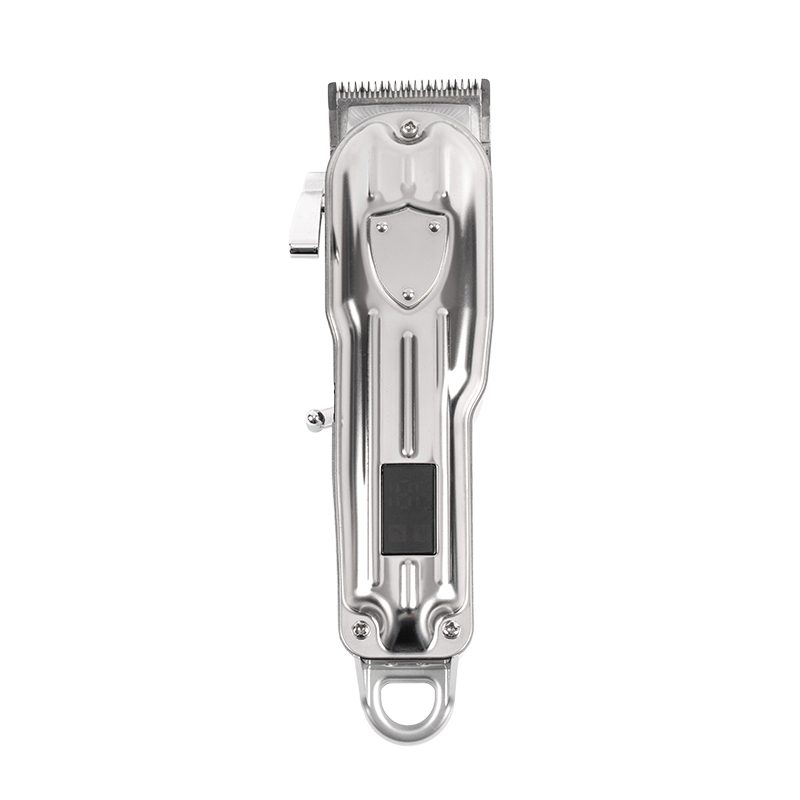
LT-1258 Precision Blade Hair Clipper
Product Overview and Intended Use
The LT-1258 is an electric hair clipper categorized for general hair trimming and precision cutting. It is not presented as a single-purpose disposable grooming tool. Instead, it is configured as a reusable rechargeable device with a motor, replaceable or rechargeable battery system, detachable guide combs, maintenance accessories, and USB charging support.
The standard accessory package includes an oil bottle, a cleaning brush, four comb attachments, and one USB cable. These components address the basic requirements of operation and maintenance. The guide combs help users select a preferred cutting length, while the brush assists in removing loose hair from the blade area and housing. The oil bottle is intended to support regular blade lubrication, which can help reduce friction and preserve smooth operation when used according to appropriate maintenance instructions.
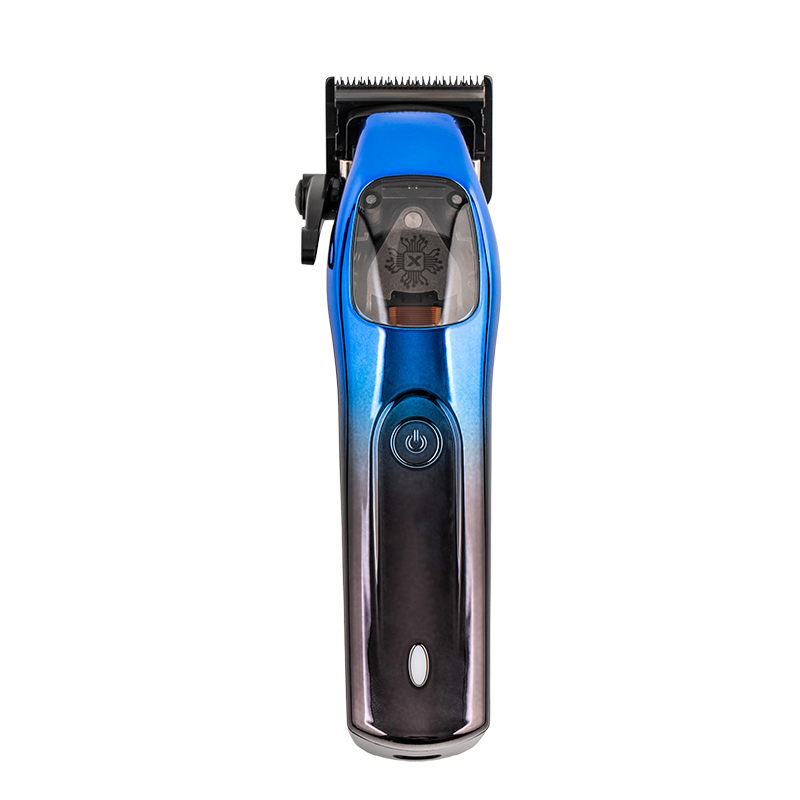
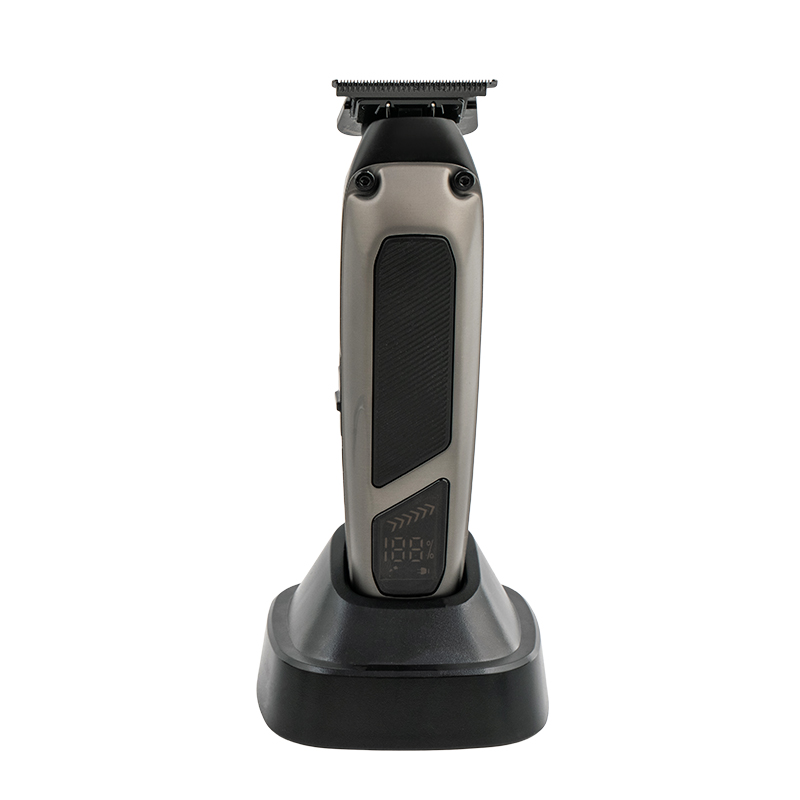
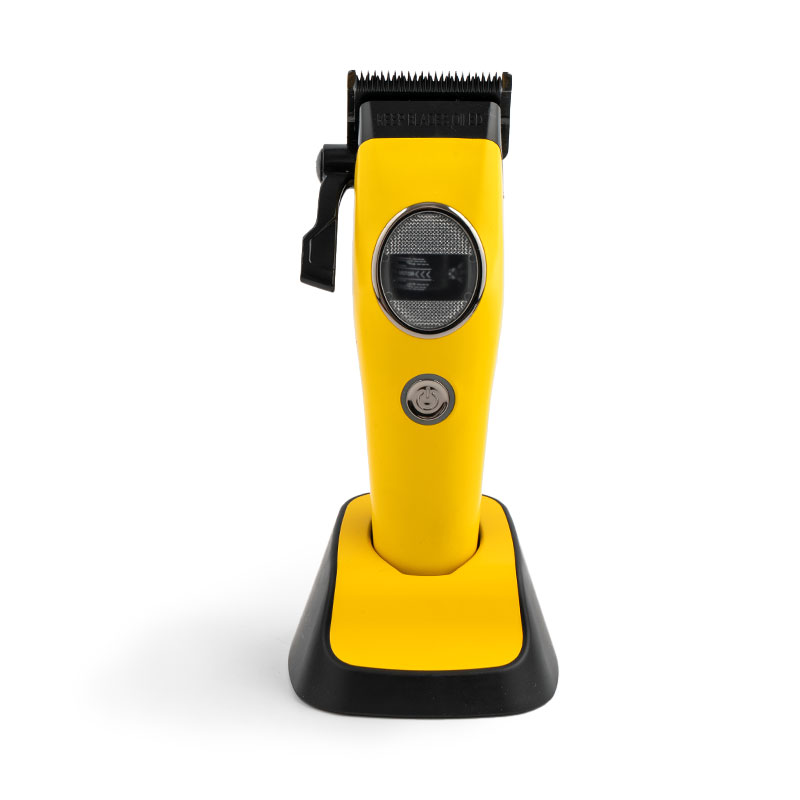
The clipper is available with black, red, or transparent body options. Black generally communicates a professional and understated appearance, while red can provide stronger shelf visibility and a more energetic consumer appeal. A transparent option can emphasize the internal visual structure of the product and may be suitable for brands seeking a distinctive or more technology-oriented presentation.
The housing is made from ABS, a common engineering thermoplastic used in small electrical appliances. ABS offers a useful balance of rigidity, impact resistance, mouldability, and cost efficiency. It also provides a suitable surface for color matching, branding, and product-shape development. For a cordless clipper, the material must support comfortable handling while protecting the motor, circuit components, and battery compartment during ordinary use.
The product is packaged in a color box with blister small gift box packaging. This format can support retail display, protect the main device and accessories, and create an organized presentation for e-commerce fulfillment or physical store distribution. Packaging can also be adapted during OEM or ODM cooperation, subject to the agreed design, printing, testing, and order requirements.
Core Specification Summary
| Specification | Stated Configuration |
|---|---|
| Product model | LT-1258 Precision Blade Hair Clipper |
| Product category | Electric hair clipper |
| Body colors | Black, red, and transparent |
| Body material | ABS |
| Blade material or process | Powder metallurgy |
| Motor speed | 3.2 V, 7,200 RPM |
| Battery options | 18650, 1,500 mAh or 2,000 mAh |
| Charging method | USB interface with one USB cable |
| Charging time | Approximately 2.5 or 3.5 hours, depending on configuration |
| Discharge time | Up to 150 minutes as specified |
| Power | 5 W |
| Accessories | Oil bottle, brush, four comb attachments, and USB cable |
| Packaging | Color box and blister small gift box packaging |
The listed battery and charging figures indicate that configurations may vary. The 1,500 mAh and 2,000 mAh battery options can be selected according to target price, expected runtime, product positioning, and market requirements. Likewise, the stated charging times differ by configuration. Brand owners should confirm the final battery specification, charger or USB power requirements, operating instructions, and applicable compliance documentation before commercial release.
Precision Cutting Through Blade and Motor Coordination
A hair clipper’s practical performance depends on the interaction between the blade system, motor, power supply, housing, and guide combs. A high motor speed alone does not guarantee a superior result. The moving blade must maintain a suitable relationship with the stationary blade, and the product must control vibration, heat, and power consumption during operation. The LT-1258 is configured to address these factors through a powder metallurgy blade and a motor specified at 7,200 RPM.
Powder Metallurgy Blade Construction
Powder metallurgy is a manufacturing approach in which metal powder is compacted and processed into a shaped component. Depending on the material formulation and production process, this method can support consistent dimensions, efficient material utilization, and repeatable production of small precision parts. For clipper blades, dimensional consistency is important because the blade edges must work closely together while maintaining an appropriate cutting relationship.
The use of a powder metallurgy blade gives the LT-1258 a product story that is more technically substantial than a generic low-cost clipper using an unspecified blade construction. It can help manufacturers maintain repeatability across production batches, while the resulting component can be integrated into a compact cutting head designed for detailed grooming. Proper blade alignment, surface finishing, hardness, edge geometry, and quality inspection remain essential to the final result.
For users, the main practical benefit is the potential for a clean and controlled cutting action when the blade is correctly maintained. Regular cleaning helps prevent hair accumulation, while a small amount of suitable blade oil can help reduce friction. The supplied cleaning brush and oil bottle therefore contribute directly to the long-term usability of the device rather than serving merely as decorative accessories.
7,200 RPM Motor Performance
The motor is specified at 3.2 volts and 7,200 RPM. This operating speed is intended to provide rapid blade movement for efficient trimming. A fast reciprocating blade can help reduce pulling and repeated passes when cutting ordinary hair, although actual performance will also depend on hair density, blade sharpness, guide-comb selection, battery condition, and user technique.
The stated power rating is 5 W. This places the product in a compact rechargeable appliance category where electrical efficiency is important. The motor must deliver enough movement to support cutting while avoiding unnecessary battery drain. A well-matched motor and blade system can provide a practical balance between cutting response and operating time.
Compared with basic corded clippers that require continuous access to a power socket, the LT-1258 combines motor performance with cordless mobility. Compared with some entry-level cordless products, its listed motor speed and powder metallurgy blade provide stronger technical positioning for brands seeking a product with a more professional specification profile.
It is important to distinguish specification advantages from guaranteed performance claims. Motor speed is a measurable characteristic, but real-world cutting quality depends on the complete system. For this reason, responsible product evaluation should include loaded cutting tests, endurance tests, noise and vibration checks, temperature checks, and user trials with different hair types.
Cordless Convenience and Battery Options
The LT-1258 uses an 18650 battery format with stated capacities of 1,500 mAh or 2,000 mAh. This battery platform is widely used in portable electronics and rechargeable appliances. Its cylindrical format can be integrated into a compact handle while offering a practical energy reserve for repeated grooming sessions.
The two battery options give distributors and brand owners flexibility. A 1,500 mAh version may be suitable for a cost-conscious retail product or a compact model where weight and price are priorities. A 2,000 mAh version may be more appropriate for a higher-positioned product, users who expect longer intervals between charges, or professional environments where the device may be used several times in a day.
The stated discharge time is 150 minutes. This figure gives the product a strong convenience proposition for household trimming. A user may be able to complete several grooming sessions before recharging, depending on the duration and intensity of each session. For salons, barbers, and mobile grooming professionals, extended cordless operation can reduce interruptions caused by cable management or limited access to sockets.
Actual runtime can vary according to the selected battery, motor load, hair thickness, blade condition, ambient temperature, battery age, and operating habits. Product literature should therefore identify the tested configuration clearly. If the 150-minute figure applies to a particular battery version or test condition, that information should be communicated accurately to avoid unrealistic expectations.
USB Charging for Flexible Use
The clipper charges through a USB interface and includes one USB cable. USB charging is familiar to consumers and can simplify use at home, in offices, during travel, or in mobile service environments. It can also reduce the need to include a dedicated regional wall charger in every package, although the final charging arrangement must comply with the requirements of the destination market.
USB compatibility is especially valuable for an international product portfolio. Different markets may use different plug formats, while USB power sources are increasingly common. A distributor can potentially pair the cable with an approved adapter suitable for a specific market or provide instructions for compatible charging sources. Electrical safety, charging current, battery protection, and local regulatory requirements must be verified for the final configuration.
The listed charging times are approximately 2.5 or 3.5 hours, depending on the selected configuration. This is a reasonable charging window for a rechargeable grooming appliance designed for extended operation rather than rapid emergency charging. A longer charge can be acceptable when the product delivers substantial cordless runtime and is charged between uses.
Ergonomics, Materials, and Everyday Handling
A hair clipper is held close to the head and face, so physical design strongly affects the user experience. The product should be easy to grip, stable during movement, and sufficiently balanced to reduce hand fatigue. The LT-1258 uses an ABS housing, allowing the manufacturer to create a shaped body with a practical combination of lightness, rigidity, and surface finish.
ABS is also well suited to color customization. The available black, red, and transparent versions can serve different branding strategies without requiring the entire internal architecture to change. Color selection can influence perceived market position: black may be used for professional collections, red for lifestyle or gift-oriented lines, and transparent for visually distinctive promotional ranges.
In addition to appearance, the housing supports the protection and organization of internal components. The battery, motor, control elements, and wiring must be positioned securely to maintain reliable operation during normal handling. A properly designed shell can also help prevent hair and debris from entering sensitive areas, although users should still clean the clipper regularly and avoid exposing it to unsuitable moisture.
The guide combs extend the product’s usability beyond a single close-cut setting. Four comb attachments allow users to select different hair lengths and create more gradual results. This increases the appeal of the clipper for families, individual home users, beginners, and small professional operations that need a straightforward multi-length tool.
Users should install each comb securely before operation and select the attachment that matches the desired length. The combs should be removed and cleaned when necessary. Since attachment dimensions and cutting lengths can differ by production configuration, final packaging should state the precise length range if this information is provided by the manufacturer.
Maintenance as a Performance Advantage
The inclusion of an oil bottle and brush is a practical competitive advantage because maintenance directly affects cutting performance. Hair clippings can accumulate around the blade and comb area, increasing resistance and reducing the smoothness of operation. A dry or contaminated blade may also generate more noise or heat over time.
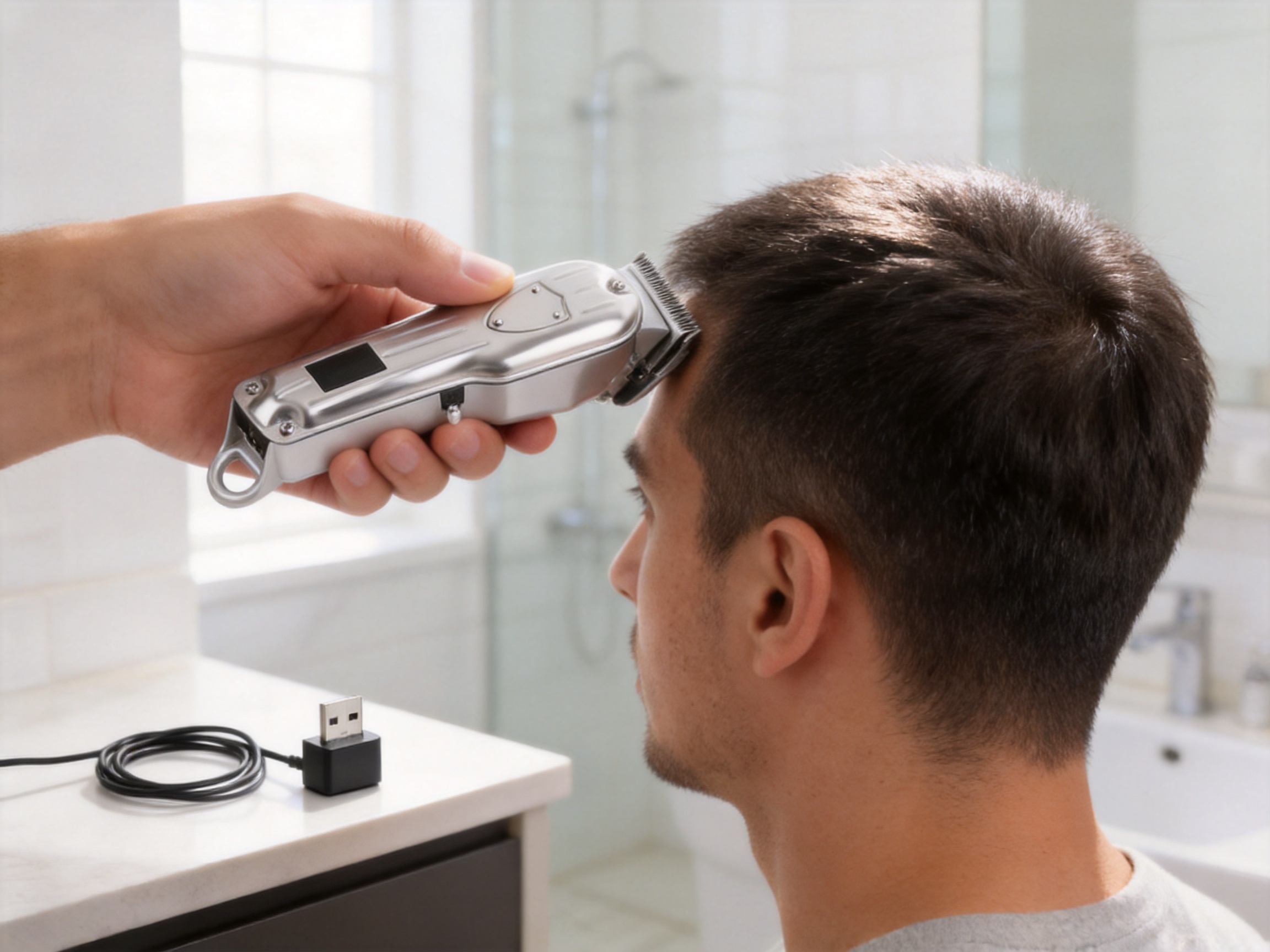
A simple maintenance routine can help preserve the clipper. After use, loose hair should be removed with the brush. The blade area should be checked for accumulation, and suitable clipper oil should be applied according to the instructions. The device should be switched off and disconnected from its charging source before cleaning. Unless the product is specifically rated for washing, it should not be immersed in water.
For distributors, including maintenance accessories can reduce the need for additional purchases and strengthen the perception that the product is designed for sustained use. For private-label brands, a clear maintenance guide can further distinguish the product from inexpensive clippers that provide minimal instructions or no care accessories.
Competitive Advantages in the Hair Clipper Market
The electric hair clipper market includes corded professional machines, low-cost rechargeable models, premium digital devices, multi-function grooming kits, and specialized detail trimmers. The LT-1258 occupies a practical middle position: it provides technical features that support a professional product narrative while maintaining a relatively straightforward construction suitable for broad distribution.
Advantage One: A Balanced Feature Package
The product combines a powder metallurgy blade, a 7,200 RPM motor, a rechargeable 18650 battery, USB charging, four comb attachments, and maintenance accessories. Each feature addresses a different consumer concern. The blade and motor relate to cutting performance, the battery and USB interface support mobility, the combs provide versatility, and the maintenance kit supports product longevity.
Many competing products emphasize only one selling point, such as a low purchase price or a decorative housing. A balanced configuration can be more valuable because it gives retailers several benefits to communicate. The product can be marketed around precision, cordless convenience, multi-length trimming, and routine care without relying on a single specification.
Advantage Two: Extended Stated Operating Time
A stated discharge time of up to 150 minutes gives the clipper a strong position against short-runtime rechargeable models. Consumers generally prefer not to recharge after every use, especially when the product is shared by several family members or used in a professional setting. Longer operating time also improves suitability for travel, where access to power may be limited.
The 1,500 mAh and 2,000 mAh battery options make it possible to align performance and commercial positioning. A brand can choose the appropriate configuration for its target market, provided the final performance, safety, and labeling information are validated.
Advantage Three: USB-Based Convenience
USB charging supports modern consumer habits and international distribution. It can make the clipper easier to use with common power sources and can simplify certain packaging strategies. In comparison with products restricted to a proprietary charging base, a USB cable can be easier to replace and more familiar to consumers.
Advantage Four: Product Customization Potential
The three available body colors offer a starting point for visual differentiation. OEM and ODM customers may also discuss packaging, logo application, instruction manuals, color matching, and other presentation details with the manufacturer. This flexibility is important for importers and brand owners that need a recognizable product rather than an anonymous catalogue item.
Advantage Five: Accessory Completeness
The oil bottle, brush, four comb attachments, and USB cable make the package ready for use. A consumer does not need to purchase basic accessories separately. A retailer can also present the item as a complete grooming solution instead of a bare clipper body that requires additional components.
Manufacturing Capability and Engineering Support
Product performance begins with design, but consistent commercial quality depends on manufacturing systems. Yuyao Laituo Electric Appliance Co., Ltd. describes itself as a modern personal-care electrical enterprise integrating research and development, production, and sales. Its product range includes electric hair clippers, electric shavers, and body trimmers, allowing the company to develop experience across related grooming categories.
The company operates in Yuyao, an industrial area known for mould manufacturing and supported by a broad electronics and component supply chain. This environment can be valuable for a product such as the LT-1258 because the clipper requires coordinated work across plastic moulding, blade production, motor integration, battery installation, wiring, assembly, packaging, and inspection.
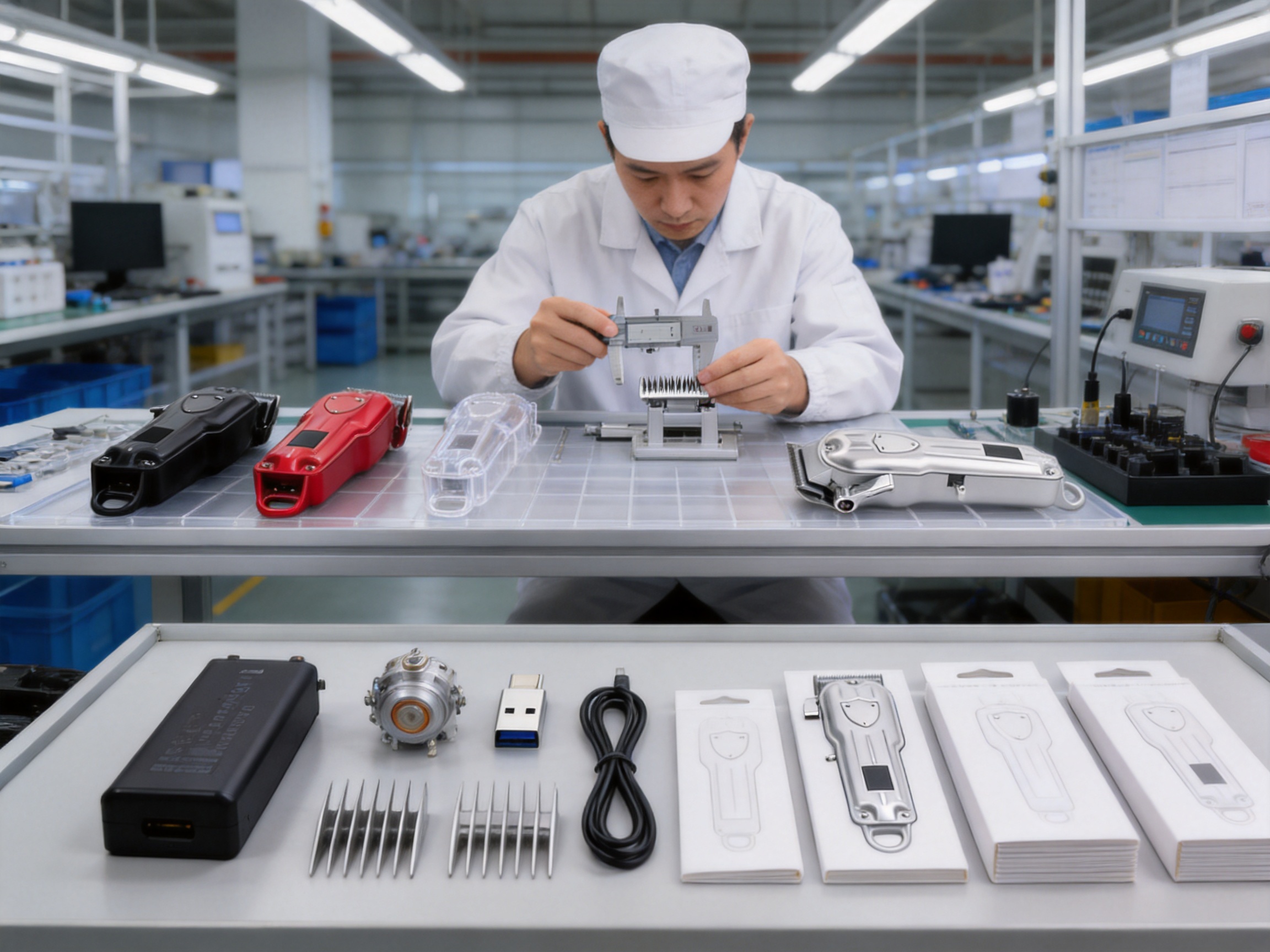
The company states that it covers approximately 1,000 square meters and has nearly 100 employees. It also reports automated production lines and precision testing equipment. These resources are relevant to customers that require repeatable assembly and measurable inspection rather than purely manual production. Automated or semi-automated processes can help standardize key tasks, while testing equipment can support verification of electrical and mechanical functions.
From Product Development to Finished Assembly
An integrated manufacturing process can improve communication between design and production teams. During product development, engineers can consider mould feasibility, component availability, assembly time, battery placement, serviceability, and packaging requirements. This approach can help reduce design changes after tooling has begun.
For the LT-1258, the manufacturing process may involve several coordinated stages. First, the product structure and appearance are defined. The housing design must accommodate the motor, battery, blade assembly, charging interface, switches, and internal connections. Next, moulds and production tooling are prepared for the ABS body and relevant components. The blade, motor, battery, and electronic parts are then sourced or produced according to the selected specification.
During assembly, operators or automated equipment install the internal components, connect the electrical system, secure the motor, and fit the cutting head. The completed units can then undergo functional checks, charging checks, operating checks, appearance inspection, and packaging verification. The exact inspection plan should be agreed with the customer and matched to the destination market.
Precision Testing and Process Control
Testing is particularly important for rechargeable grooming devices because electrical, mechanical, and user-safety factors interact. A suitable quality program may include checks for power-on operation, motor response, charging behavior, battery installation, abnormal noise, vibration, blade movement, housing fit, switch function, accessory completeness, and packaging condition.
Dimensional inspection can help verify moulded housing components and blade-related parts. Electrical testing can help identify wiring problems, charging faults, or insulation issues. Endurance testing can provide information about motor stability and operating temperature. Drop or transport simulation may be used when appropriate to evaluate packaging and structural robustness.
The manufacturer states that its products have passed CE and RoHS certifications. These certifications and compliance declarations should be connected to the specific model, configuration, production version, and destination-market requirements. Customers should request the relevant documentation and confirm that any changes to the battery, charger, materials, or electrical design do not affect compliance status.
OEM and ODM Value for Brand Owners
The LT-1258 can serve as a finished catalogue product, but it may also provide a foundation for OEM or ODM cooperation. OEM customers typically seek a reliable existing platform that can be sold under their own brand, while ODM customers may require deeper adjustments to appearance, packaging, functions, or configuration. A manufacturer with product development and production capability can support both approaches more effectively than a trading company with limited engineering resources.
Branding and Exterior Customization
Color is one of the simplest ways to adapt the product to a brand identity. The black, red, and transparent options can be evaluated against a customer’s existing product portfolio. Depending on production feasibility, customers may also discuss logo printing, surface treatment, decorative elements, switch markings, and packaging design.
Customization should be evaluated in relation to order quantity, tooling requirements, production lead time, color minimums, and quality standards. A visually attractive product must still maintain reliable assembly and consistent appearance across batches. Color matching samples and pre-production approvals are useful tools for controlling expectations.
Packaging and Retail Presentation
The color box and blister small gift box format gives the product a retail-ready foundation. For a private-label launch, packaging can be developed to include the brand story, technical specifications, usage instructions, maintenance guidance, safety warnings, barcode information, and compliance marks where applicable.
Good packaging should protect the clipper and accessories while making the contents easy to identify. It should also be compatible with shipping and warehouse handling. For e-commerce brands, packaging dimensions and weight can influence fulfillment costs, so early evaluation is advisable.
Configuration Selection
The battery capacity is an important configuration decision. The 1,500 mAh option may help create a lighter or more economical product, while the 2,000 mAh option may support a longer-runtime positioning. The selected configuration should be tested as a complete system because battery capacity can influence charge time, weight, internal space, thermal behavior, and packaging information.
Customers may also evaluate the guide-comb set, cable specification, blade treatment, color combination, and instruction materials. A clearly defined product specification sheet can prevent misunderstandings between the buyer, engineering team, production department, and quality-control personnel.
Quality, Compliance, and Responsible Product Positioning
Personal-care electrical appliances are used close to the skin and often handled by consumers without technical training. Quality and compliance should therefore be central to product development. A clipper must not be judged solely by appearance or advertised motor speed. Battery safety, charging behavior, insulation, mechanical stability, blade protection, and user instructions are equally important.
The manufacturer reports CE and RoHS certification for its products. CE marking relates to applicable European Union conformity requirements, while RoHS addresses restrictions on certain hazardous substances in electrical and electronic equipment. The exact obligations vary according to the final product, market, and supply arrangement. Importers and brand owners remain responsible for confirming the compliance documentation required for their sales regions.
Battery products may also be subject to transport, labeling, recycling, and documentation requirements. The exact battery cell, protection circuit, charging arrangement, and packaging configuration should be identified. Customers should request technical files, test reports, declarations, and other supporting documents as appropriate.
Responsible product communication is also important. Claims should be based on verified test results. For example, “up to 150 minutes” is more precise than guaranteeing the same runtime under every condition. Similarly, a 7,200 RPM motor specification should not automatically be translated into claims that the clipper is suitable for every hair type or professional application unless those claims have been tested.
Quality Assurance Across the Supply Chain
Quality assurance begins with incoming components. Battery cells, motors, blades, ABS housings, comb attachments, cables, and packaging materials should be checked against approved specifications. During assembly, critical operations should be controlled through work instructions and inspection points. Final inspection should confirm both function and appearance.
Batch traceability can support investigation if a problem is identified after shipment. Records may include production date, component batch, operator or line information, inspection results, and packaging details. This type of information is valuable for export customers that need structured after-sales support and market surveillance.
Customer involvement can further strengthen quality. A buyer may define an approved sample, acceptable quality limits, packaging requirements, inspection standards, and pre-shipment procedures. Clear communication before mass production is more efficient than resolving specification disputes after goods have been delivered.
Use Cases and Target Markets
The LT-1258 is suitable for several market segments because it combines general trimming capability with cordless convenience. It can be positioned as a household hair clipper for individual users or families. The four guide combs make it more flexible than a simple detail trimmer, while the rechargeable design makes it more convenient than a permanently corded appliance.
Barbers and small grooming businesses may consider the product for backup use, travel kits, junior staff, or selected trimming tasks. Professional users will generally evaluate additional factors such as continuous-duty performance, blade replacement availability, cleaning requirements, noise, vibration, and service support. The suitability of the product for intensive professional operation should be confirmed through practical testing rather than assumed from consumer specifications.
Travel and lifestyle retailers may value the USB charging format and compact accessory package. Gift and promotional-product distributors may find the color options and retail packaging useful. E-commerce brands can build content around the combination of cordless operation, multiple combs, maintenance accessories, and extended stated runtime.
International distributors should consider local preferences concerning color, plug adapters, packaging language, warranty terms, and charging instructions. The manufacturer’s export experience, including sales to more than 30 countries and regions according to the supplied company information, can be an advantage when coordinating overseas orders and documentation.
How to Evaluate the Clipper Before Purchasing
Buyers should begin by identifying the intended use. A household product may prioritize comfort, runtime, easy cleaning, and price. A professional product may require more extensive endurance, replacement parts, service arrangements, and technical documentation. A private-label launch may place greater importance on packaging, branding, minimum order quantities, and delivery schedules.
The next step is to confirm the exact configuration. Buyers should specify the battery capacity, body color, comb attachments, cable, packaging, logo requirements, and instruction language. They should also request a sample of the proposed mass-production version rather than evaluating only a general photograph.
Performance evaluation can include cutting tests on different hair lengths and densities, loaded motor operation, runtime measurement, charging-time measurement, noise assessment, vibration assessment, and temperature monitoring. The blade should be inspected after repeated use, and the guide combs should be checked for secure attachment and dimensional consistency.
Packaging should be examined for protection, accessory organization, print quality, barcode placement, and transport suitability. If the product is intended for e-commerce, the buyer should also evaluate whether the package is sufficiently durable for parcel delivery.
Finally, commercial terms should be reviewed. Important points may include minimum order quantity, sample fees, tooling costs, production lead time, payment terms, warranty policy, spare parts, inspection arrangements, shipping documents, and after-sales support. A detailed written specification protects both sides and helps ensure that the delivered product matches the approved sample.
Care and Operating Recommendations
Before first use, the clipper should be charged according to the supplied instructions. The user should check that the blade and selected guide comb are installed correctly. The device should be used on clean, reasonably dry hair unless the product documentation specifically permits another method.
After use, hair should be brushed away from the blade and comb area. A small amount of appropriate clipper oil may be applied as recommended. Excess oil should be removed from surfaces that contact the user. The device should be stored in a clean, dry location and protected from unnecessary impact.
The cable and charging interface should be checked periodically for damage. If the housing is cracked, the battery becomes unusually hot, charging behaves abnormally, or the motor produces an unusual sound, the product should be removed from service and inspected by an appropriate technician or supplier.
Guide combs should be cleaned separately and allowed to dry completely if they are washed. The main clipper body should not be immersed unless it has been specifically designed and certified for immersion or washing. These simple precautions help protect the electrical system and maintain hygienic use.
Q&A: Common Questions About the Precision Blade Hair Clipper
What type of product is the LT-1258?
The LT-1258 is a rechargeable electric hair clipper designed for general hair trimming and precision cutting. It includes four comb attachments for different cutting-length requirements.
What blade technology does it use?
The product is specified with a powder metallurgy blade. This manufacturing approach can support repeatable dimensions and is suitable for precision small metal components. Cutting performance also depends on alignment, edge finishing, maintenance, and operating technique.
How fast is the motor?
The motor is specified at 3.2 volts and 7,200 RPM. Actual cutting results depend on the complete blade, motor, battery, and guide-comb system.
How long can the clipper operate?
The stated discharge time is up to 150 minutes. Actual runtime may vary according to the selected 1,500 mAh or 2,000 mAh battery, hair density, motor load, battery age, and operating conditions.
How long does charging take?
The listed charging times are approximately 2.5 or 3.5 hours, depending on the product configuration. Buyers should confirm the applicable charging time for the selected battery version.
How is the clipper charged?
It uses a USB interface and is supplied with one USB cable. The final power source and adapter arrangement should be selected and verified according to the destination market’s electrical requirements.
What accessories are included?
The stated accessories are an oil bottle, cleaning brush, four comb attachments, and USB cable. Buyers should confirm the final accessory list before placing a production order.
What colors are available?
The listed body colors are black, red, and transparent. Additional customization may be discussed with the manufacturer, subject to production feasibility and order requirements.
What material is used for the housing?
The body is made from ABS. This material is commonly used in small electrical appliances because it offers a practical balance of strength, mouldability, weight, and color customization.
Is the product suitable for professional barbers?
It may be suitable for selected professional or backup applications, but intensive professional use should be confirmed through endurance, heat, noise, vibration, and cutting tests. Professional buyers should also review spare-part and after-sales arrangements.
Can the product be sold under a private label?
The manufacturer presents OEM and ODM capabilities. Private-label customers can discuss logo application, colors, packaging, accessories, documentation, and selected configuration details with the supplier.
What certifications are associated with the product range?
The company states that its products have passed CE and RoHS certifications. Customers should request model-specific documentation and confirm that the final battery, charger, materials, and production configuration are covered.
How should the blade be maintained?
The blade should be cleaned with the supplied brush after use and lubricated with suitable clipper oil according to the instructions. The clipper should be switched off before maintenance, and the main body should be kept away from unsuitable moisture.
What should importers confirm before ordering?
Importers should confirm the exact battery capacity, runtime test conditions, charging time, cable specification, accessory list, colors, packaging, logo requirements, compliance documents, minimum order quantity, lead time, inspection method, warranty policy, and shipping documentation.
Why Manufacturing Strength Matters to Product Buyers
A hair clipper may appear simple from the outside, but its reliability depends on many coordinated details. The housing must fit correctly, the motor must be mounted securely, the blade must align properly, the battery must charge safely, and the accessories must remain compatible with the final product. A manufacturer that controls or coordinates these stages can respond more efficiently when a customer requires changes.
Yuyao Laituo Electric Appliance Co., Ltd. combines product development, production, and sales within its personal-care appliance operation. Its reported automated production lines and precision testing equipment provide a foundation for repeatability. Its local industrial environment supports access to mould, electronic, plastic, metal, and assembly resources. These factors can help reduce communication gaps and support the development of consistent OEM or ODM products.
The company’s stated export experience and independent export rights are also relevant to international customers. Overseas buyers generally need more than a product sample. They need coordinated communication, stable production, export documentation, packaging control, compliance support, and a clear process for handling quality issues. A manufacturer that understands these requirements can become a longer-term supply partner rather than a one-time source.
Conclusion
The LT-1258 Precision Blade Hair Clipper is built around a practical combination of precision-oriented blade construction, 7,200 RPM motor performance, rechargeable battery options, USB charging, multiple guide combs, and maintenance accessories. Its up to 150-minute stated discharge time supports cordless convenience, while the 1,500 mAh and 2,000 mAh battery choices give brand owners flexibility in balancing price, weight, and runtime.
Its competitive value lies in the balance of the complete package. The product is not limited to a motor and blade; it includes the basic accessories and charging method needed for everyday use. ABS housing and multiple color options support ergonomic handling and brand differentiation. The powder metallurgy blade provides a technically meaningful feature for product positioning, while the maintenance kit encourages long-term care.
Equally important is the manufacturing background behind the device. Yuyao Laituo Electric Appliance Co., Ltd. brings together R&D, production, assembly, testing, and export support within a personal-care electrical appliance business. Its Yuyao location, reported automated production lines, precision testing equipment, and OEM/ODM orientation provide a useful foundation for distributors, importers, and private-label brands.
For the best commercial result, buyers should confirm the final configuration, test representative samples, verify compliance documents, define packaging and quality requirements, and establish clear after-sales arrangements. When these steps are completed carefully, the LT-1258 can serve as a versatile and commercially adaptable cordless hair clipper for household, travel, retail, and selected professional grooming applications.
References
1. Product specification sheet for the LT-1258 Precision Blade Hair Clipper, including motor, battery, blade, accessory, charging, and packaging information.
2. Manufacturer information supplied by Yuyao Laituo Electric Appliance Co., Ltd., including company capabilities, product categories, production resources, export experience, and quality statements.
3. General engineering references on powder metallurgy, compact metal component production, dimensional consistency, and precision manufacturing.
4. General technical references on rechargeable lithium-ion battery systems, 18650 battery formats, charging safety, and portable electrical appliances.
5. General product-development references on electric hair clipper blade maintenance, lubrication, cleaning, guide-comb use, and consumer appliance quality control.
Product: LT-1258 Precision Blade Hair Clipper

+86-574-62151741
+86-13655842900
laituo@google.com
No. 22 Liufang Road, Yuyao Industrial Park, Ningbo City, China
Copyright © Yuyao Laituo Electric Appliance Co., Ltd. All Rights Reserved
OEM/ODM Hair Removal Tool Epilator Manufacturers
