
 русский
 Français
 Español
 Deutsch
 عربى

Professional Electric Hair Clippers for Home and Salon-Quality Grooming
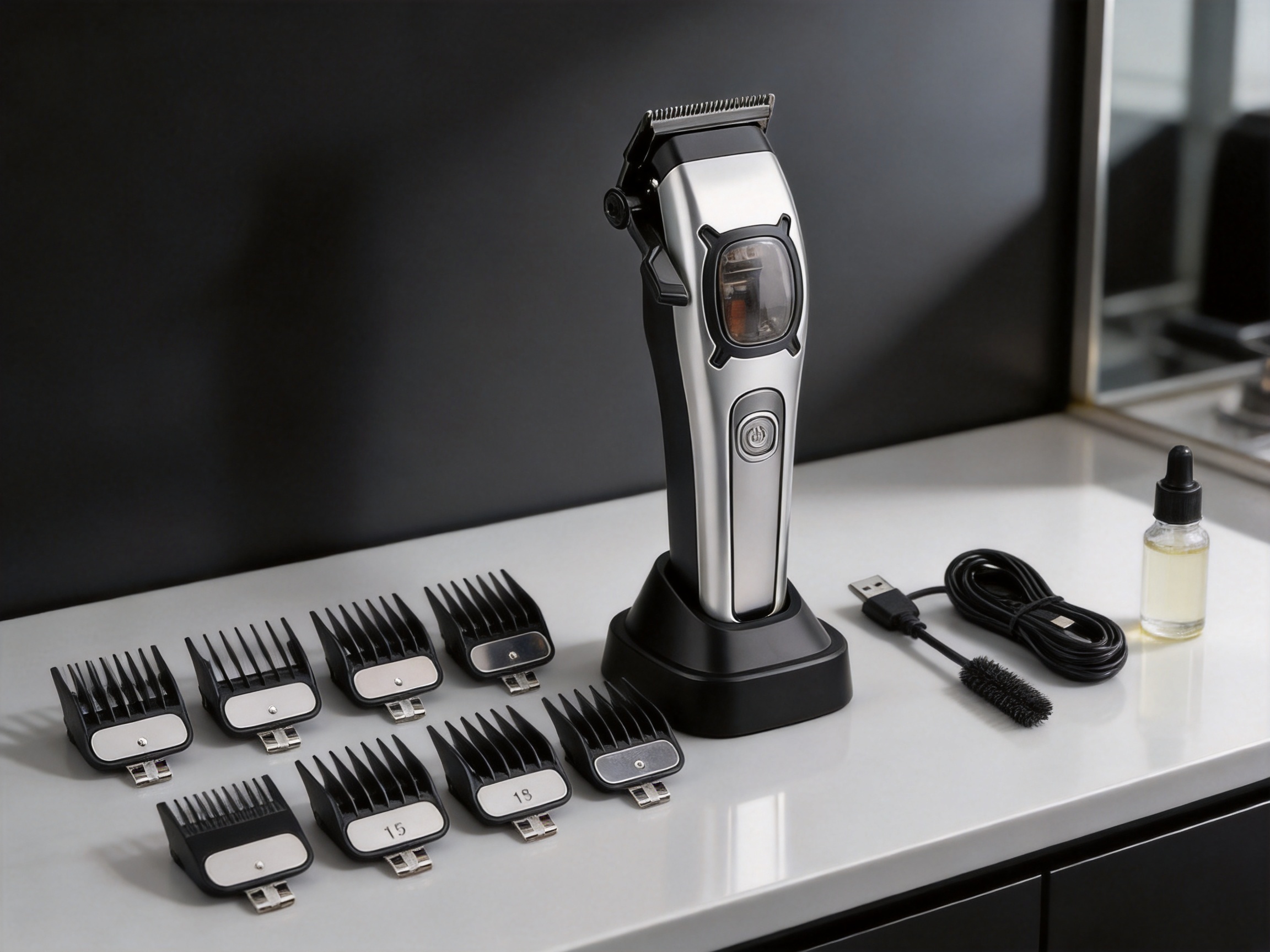
Choosing a dependable hair clipper is about much more than selecting a motor and a set of combs. A modern clipper must deliver consistent cutting power, controlled heat, comfortable handling, reliable battery performance, and sufficient styling flexibility for different hair lengths. It should also be easy to maintain, durable enough for repeated use, and quiet enough to make grooming more comfortable at home or in a professional salon.
The LT-761 professional electric hair clipper is designed around these practical requirements. It combines a high-speed magnetic levitation motor, a DLC-coated precision blade, a high-capacity rechargeable battery, a charging base, and eight guide combs in one complete grooming system. Its configuration is intended to support home haircuts, family grooming, barber-style detailing, and everyday styling without requiring a complicated setup.
With a 9,000 RPM magnetic levitation motor, 7.5-watt power rating, 21700/4500 mAh battery, and an operating time of approximately 240 to 270 minutes, the clipper is built for extended use. The included combs cover lengths from 1.5 millimeters to 19 millimeters, giving users the flexibility to create short cuts, tapers, blended styles, and controlled trims.
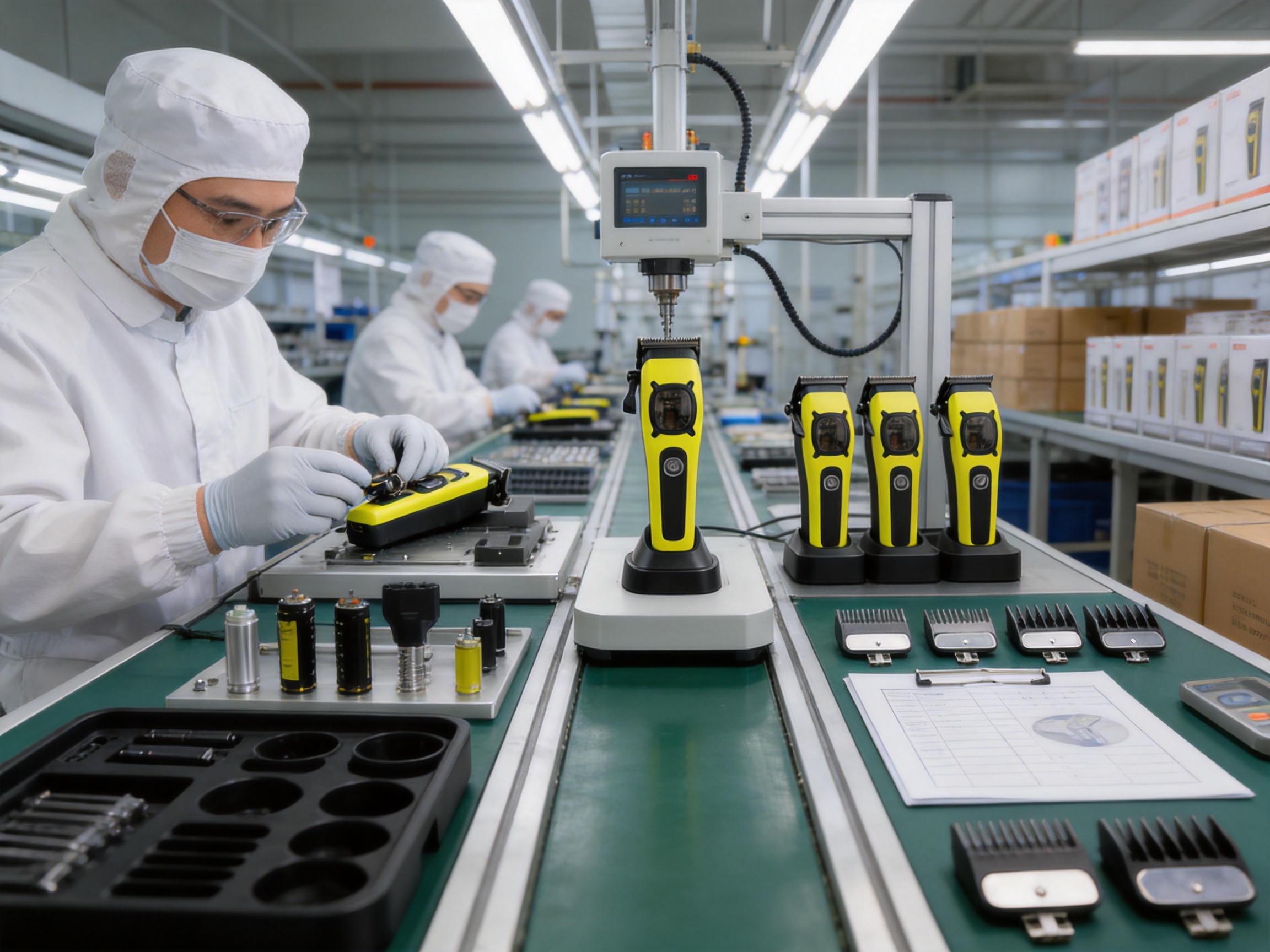
Beyond the product itself, the manufacturing background behind this type of grooming device is equally important. A reliable clipper depends on accurate molding, stable motor assembly, blade alignment, battery integration, safety testing, and consistent final inspection. The manufacturer behind this product operates an integrated research, development, production, and sales model, supported by automated production lines and precision testing equipment.
Why a Modern Hair Clipper Must Do More
Traditional entry-level clippers often focus on a single feature, such as a low purchase price or a basic rechargeable design. However, users quickly notice limitations when the device is used regularly. Weak motors may slow down in dense hair. Poorly finished blades may pull hair or require repeated passes. Low-capacity batteries may need frequent charging, while inefficient motors can create uncomfortable heat during longer sessions.
A professional-oriented clipper needs to provide a more balanced experience. It should cut efficiently while remaining comfortable against the skin. It should offer enough power for thick or coarse hair but avoid excessive vibration. It should maintain performance as the battery discharges and support multiple cutting lengths without requiring separate devices.
The LT-761 addresses these expectations through a combination of mechanical and electronic design choices. Its magnetic levitation motor is intended to provide high-speed rotation with stable power output. The DLC-coated blade is designed for hardness, wear resistance, corrosion resistance, and smooth contact with hair. The large-capacity battery supports long operating periods, while the included accessories improve its versatility for different users.
This integrated approach gives the product an advantage over basic clippers that rely on a low-speed motor, a standard uncoated blade, a small battery, or a limited set of attachments. The most important benefit is not a single specification in isolation, but the way the motor, blade, battery, housing, accessories, and charging system work together.
Magnetic Levitation Motor for Stable Cutting Performance
The motor is the core of any electric hair clipper. It determines how quickly the blades move, how effectively they handle resistance, how much vibration the user feels, and how much heat is produced during operation. A motor that loses speed when it encounters dense hair can lead to uneven cutting, hair pulling, and repeated passes over the same area.
The LT-761 uses a magnetic levitation motor rated at 9,000 RPM. Magnetic levitation motor architecture is designed to reduce physical friction within the rotating system. By minimizing direct contact between key moving components, the motor can achieve smooth rotation and stable operation. This design supports a fast blade movement while helping to reduce mechanical wear.
High rotational speed is especially useful when cutting thick, coarse, or heavily textured hair. A fast-moving blade can process more hair with each pass, allowing the user to work more efficiently. It can also help maintain a consistent cutting rhythm when creating outlines, short cuts, fades, or general trims.
Stable power output is another important advantage. A clipper may appear powerful when tested without hair, but the real test begins when the blade encounters resistance. The LT-761 is engineered to provide steady support during cutting, helping the blade continue moving smoothly rather than stalling or slowing sharply.
The motor is also designed to produce low noise and slight vibration. These characteristics matter in both domestic and professional environments. At home, lower noise makes the device less disruptive, particularly when cutting children’s hair or grooming early in the morning. In a salon, a quieter clipper contributes to a more comfortable atmosphere when several devices are operating at the same time.
Reduced vibration can improve control as well. Excessive vibration may cause hand fatigue during long sessions and can make it more difficult to maintain a straight outline. A smoother motor response helps the user guide the clipper steadily around the sides, neckline, temples, and other detailed areas.
Performance During Continuous Operation
Heat management is a common concern with rechargeable hair clippers. When a motor operates continuously, friction, electrical resistance, and blade contact can gradually increase the temperature of the device. Excessive heat may make the housing uncomfortable to hold and may affect the comfort of the blade against the skin.
The LT-761 magnetic levitation motor is designed to support continuous operation with low heat generation. Its high-speed, low-friction structure helps reduce unnecessary energy loss, while the blade design supports rapid heat dissipation. Although every electric grooming device should be used and maintained according to its instructions, this configuration is intended to provide a more comfortable experience during extended cutting sessions.
This makes the clipper suitable for family grooming, repeated household use, and professional environments where several haircuts may be completed in succession. Long operating sessions are easier when the motor remains stable, the housing stays manageable, and the cutting performance does not decline quickly.
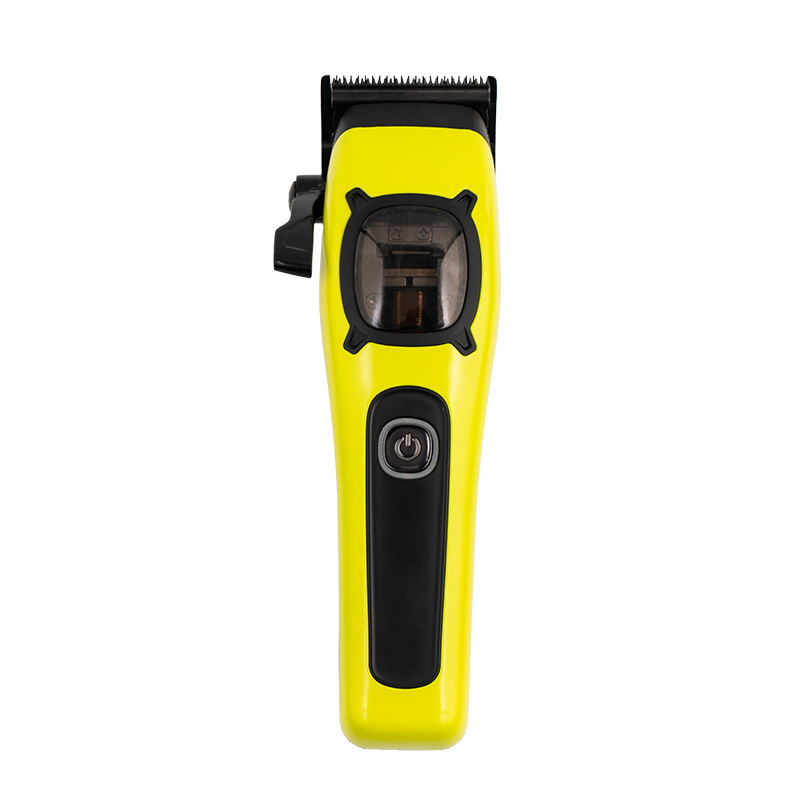
LT-761 Professional Electric hair clippers For Home
DLC-Coated Precision Blade for Smooth Cutting
The blade is the point where the clipper meets the hair and, in many styles, the skin. Its material, geometry, surface treatment, and alignment directly influence cutting comfort and accuracy. A blade that becomes dull quickly may tug at hair, require more passes, and create an inconsistent finish.
The LT-761 uses a DLC-coated blade head. DLC means Diamond-Like Carbon, a surface coating technology known for high hardness and low-friction characteristics. The coating is intended to improve wear resistance and help the blade retain its sharp cutting performance during regular use.
High hardness helps protect the cutting surface from premature wear. This is particularly relevant for users who operate the clipper frequently or for professional stylists who use the device throughout the day. A durable blade can reduce the need for frequent replacement and help preserve a consistent cutting experience over time.
Corrosion resistance is another practical benefit. Grooming tools may be exposed to hair particles, skin oils, cleaning products, and moisture. A corrosion-resistant blade surface is easier to maintain and better suited to long-term use when cleaned and lubricated correctly.
The smooth surface of the cutter head also helps reduce friction as hair passes through the blade. This may lessen hair jamming and improve the glide of the clipper across the head. A smoother contact surface can be especially valuable when working near the hairline, around the ears, or on sensitive areas of the neck.
Blade comfort is closely related to blade precision. A sharp, accurately aligned blade can cut hair cleanly instead of bending or pulling it before cutting. This supports a more comfortable grooming experience and can help users achieve a neater result with fewer passes.
Blade Design for Different Styling Tasks
The blade head is suitable for a broad range of grooming tasks, including general haircuts, short styles, sideburn maintenance, neckline cleanup, and detail work. When used without a guide comb, it can support shorter cutting applications, while the included combs allow the user to maintain more specific lengths.
For professional users, a reliable blade is important when creating transitions between lengths. A fade or taper requires controlled movement and consistent cutting behavior. The blade must respond predictably as the user changes direction and pressure. For home users, the same consistency makes it easier to follow a simple haircut routine without advanced technical experience.
Blade maintenance remains important even when a durable coating is used. Removing loose hair, applying the recommended oil, and keeping the cutter head clean can help protect the blade and maintain smooth operation. The included oil bottle and cleaning brush make these basic maintenance steps easier to perform.
Eight Guide Combs for Flexible Hair Lengths
One of the strongest practical features of the LT-761 is its set of eight limit combs. The included lengths are 1.5 millimeters, 3 millimeters, 4.5 millimeters, 6 millimeters, 9 millimeters, 12 millimeters, 16 millimeters, and 19 millimeters.
This range supports both short and medium-length cutting applications. The shorter combs are useful for close sides, short crops, outlines, and controlled tapering. The middle lengths can be used for blending and general trimming, while the longer combs provide additional coverage for fuller styles and gradual transitions.
A large accessory range is more convenient than purchasing several separate devices for different lengths. It also makes the clipper suitable for multiple users in one household. One person may prefer a close cut, another may require a medium length, and a child may need a gentle, controlled trim. The same clipper can support all of these needs by changing the guide comb.
Guide combs also help beginners achieve more consistent results. Without a comb, the user must control the distance between the blade and the scalp manually. A properly fitted comb creates a defined cutting height, reducing the risk of removing too much hair in one pass.
For experienced barbers and stylists, the comb set provides a practical foundation for detailed techniques. The various lengths can be used in sequence to build a taper, blend a transition, or maintain a uniform length across a larger area.
| Guide Comb Length | Typical Grooming Application |
| 1.5 millimeters | Very short trimming, close side areas, and detailed transitions |
| 3 millimeters | Short cuts, tapered sides, and controlled blending |
| 4.5 millimeters | Intermediate blending and short uniform styles |
| 6 millimeters | Short-to-medium cuts and gradual transitions |
| 9 millimeters | Medium-short coverage and general trimming |
| 12 millimeters | Medium-length cutting and fuller side sections |
| 16 millimeters | Longer uniform trims and transition work |
| 19 millimeters | Longer clipper cuts and maintaining fuller styles |
Large-Capacity Battery for Extended Use
Battery life has become one of the most important considerations when selecting a cordless hair clipper. A cordless device offers greater freedom of movement, but its value depends on how long it can operate before recharging. A short battery life can interrupt a haircut or create inconvenience for professional users.
The LT-761 uses a 21700/4500 mAh battery. This high-capacity battery is designed to provide approximately 240 to 270 minutes of discharge time, depending on operating conditions. The extended runtime is suitable for multiple home haircuts, repeated grooming sessions, or professional use between charging periods.
A battery with this level of capacity also reduces the need for frequent charging. Users can prepare the clipper before a busy grooming period and rely on it for an extended time. This is particularly useful in salons, barber shops, and mobile grooming situations where access to a power outlet may not always be convenient.
The rechargeable design combines cordless convenience with practical charging options. The product includes a 1.8-meter USB cable and a charging base. The USB cable provides flexibility when connecting to a compatible power source, while the charging base offers a dedicated location for storing and charging the device.
The stated charging time is approximately five hours. Because charging conditions can vary according to the power source and operating environment, users should follow the supplied operating guidance and use compatible charging equipment. A proper charging routine can help support battery longevity and reliable performance.
Charging Base and Everyday Convenience
A charging base serves two purposes: it supports charging and gives the device a defined storage position. This helps reduce the chance of leaving the clipper in an unsuitable location or misplacing the cable between uses. In a salon, a base can keep the tool upright and ready for the next appointment.
The 1.8-meter cable provides useful reach when the charging base or cable connection is positioned away from the nearest power source. It can also make charging more convenient on a work surface or grooming station.
While cordless use is the primary advantage of the rechargeable configuration, the charging system also contributes to a more organized grooming routine. The user can clean the blade, apply a small amount of maintenance oil, place the clipper on its base, and prepare it for the next session.
Ergonomic Housing and Durable Materials
The main body of the clipper is made from ABS and aluminum alloy. These materials combine practical durability with manageable weight and a modern appearance. ABS is widely used in personal care appliances because it can be molded into precise shapes, provides good impact resistance, and supports a variety of surface finishes.
Aluminum alloy contributes structural strength and can help create a solid, premium-feeling body. It is also valued for its thermal characteristics and resistance to everyday wear. The combination of ABS and aluminum alloy allows the product to balance durability, appearance, and handling comfort.
Good housing design is more than an aesthetic feature. A clipper must be comfortable to hold while the user moves it across the head from different angles. The housing should provide enough grip and control for short detailing movements as well as longer passes through thicker hair.
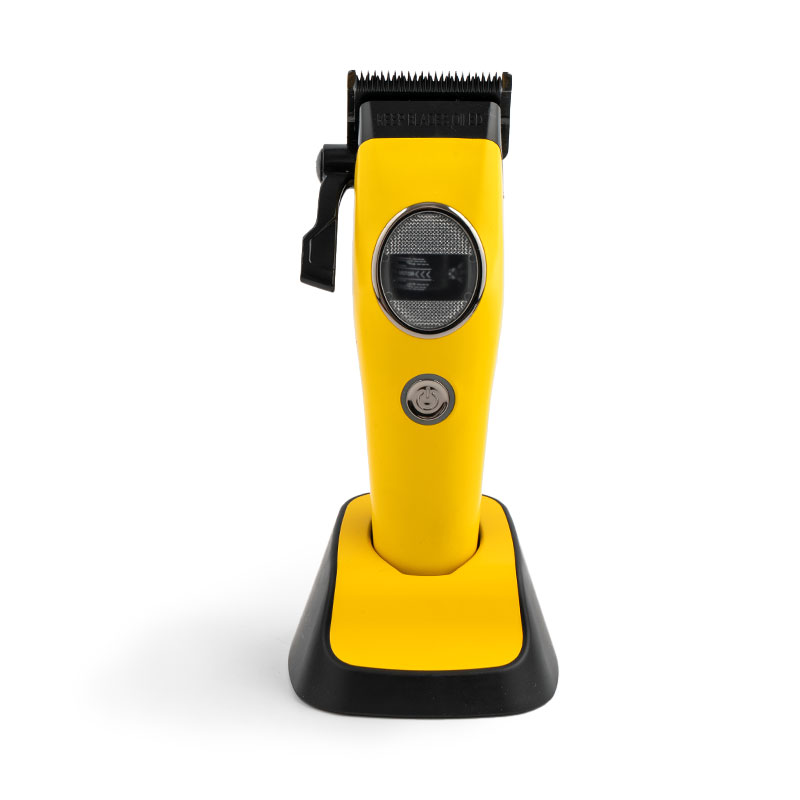
The LT-761 is available in red, yellow, and green. Multiple color options allow distributors, salons, and consumers to select a finish that matches their preferences or product positioning. Color variety can also support customized retail programs and different market presentations.
The housing is designed to protect the internal motor, battery, electronic components, and blade connection. Precise assembly is essential because even a high-quality component can perform poorly if it is fitted inaccurately. The relationship between the blade, motor shaft, housing, and control components must remain stable during operation.
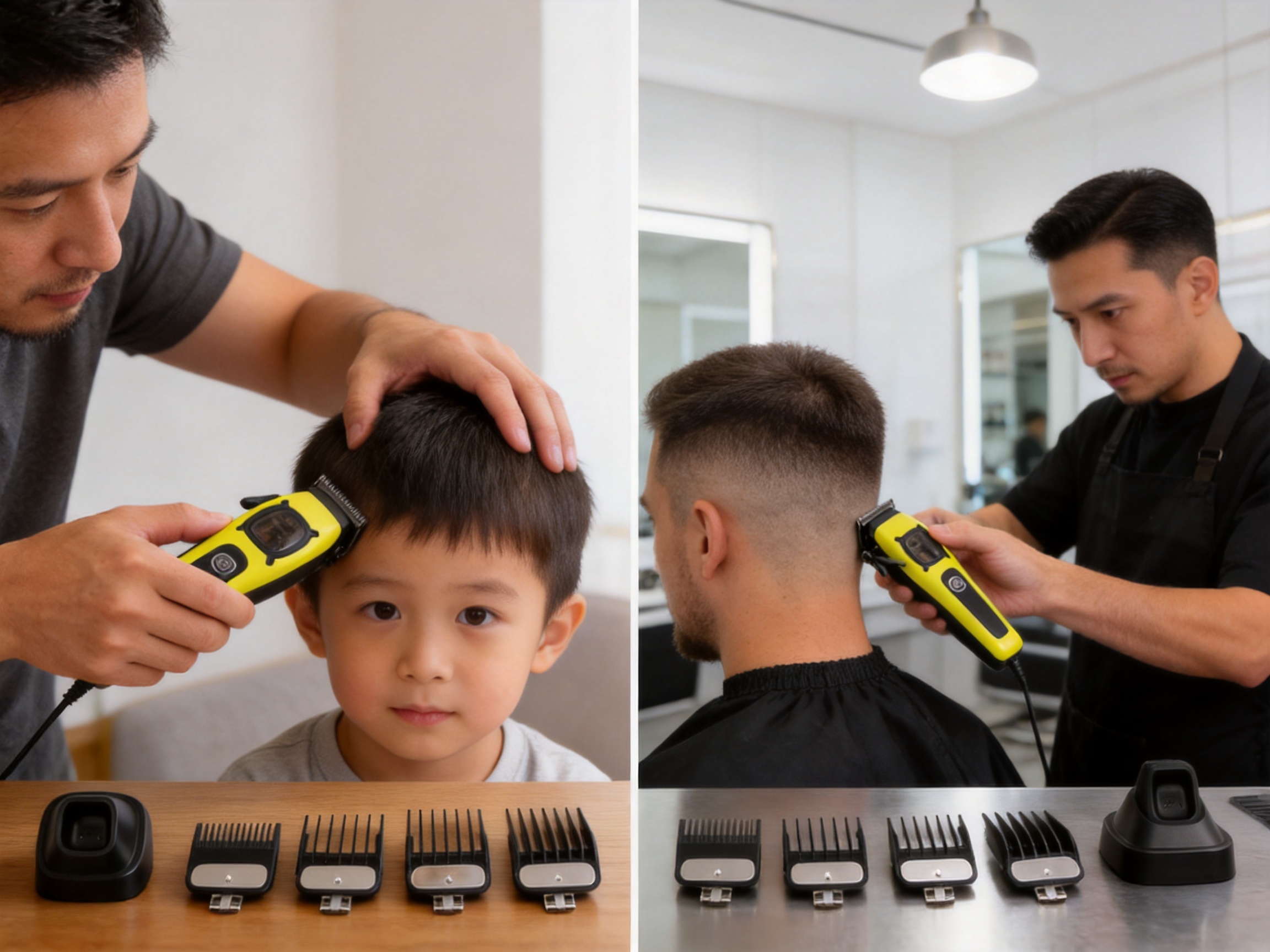
Suitable for Homes, Barbers, and Professional Salons
The LT-761 is positioned for both household and professional grooming. This broad application is possible because it combines a powerful motor with a flexible accessory set and an extended battery runtime.
For home users, the clipper offers a practical way to maintain family hairstyles without making frequent salon appointments. The guide combs make it easier to choose a suitable length, while the quiet operation and low vibration improve comfort for both the person using the clipper and the person receiving the haircut.
For barbers and stylists, the device provides the performance characteristics expected from a professional-oriented tool. The 9,000 RPM motor supports fast cutting, while the DLC-coated blade is designed for repeated use. The long battery runtime can help reduce interruptions during a sequence of appointments.
For mobile grooming services, cordless operation is particularly valuable. The user can move freely around a client without managing a power cable during the haircut. The charging base and USB cable provide flexible ways to prepare the product before traveling or between sessions.
The clipper can also serve as a useful secondary tool in a salon. Even when a professional has several specialized devices, a versatile clipper with multiple combs can be used for general cutting, maintenance appointments, family services, and quick touch-ups.
Advantages Compared with Basic Clipper Designs
Product comparisons should consider the complete user experience rather than one isolated specification. The LT-761 offers several characteristics that can distinguish it from basic clipper models.
First, its magnetic levitation motor is designed for high-speed and stable operation. Basic models may use simpler motor systems that produce greater vibration, more noise, or less consistent cutting speed under load.
Second, the DLC-coated blade offers a durable, low-friction surface. Standard uncoated blades may still provide acceptable performance, but they can be more vulnerable to wear, corrosion, and increased friction if maintenance is neglected.
Third, the 4,500 mAh battery and stated 240 to 270 minutes of operating time provide a longer working period than many compact entry-level clippers. Extended runtime is particularly useful for users who need to complete multiple haircuts before recharging.
Fourth, eight guide combs create a broader range of cutting lengths. A limited accessory set may restrict styling options or require the user to purchase additional attachments.
Fifth, the combination of a charging base and a 1.8-meter USB cable supports both organized storage and flexible charging. This is more convenient than a cable-only design that leaves the device without a dedicated charging position.
Finally, the product is supplied in a gift box with an oil bottle and cleaning brush. A complete package reduces the need to purchase basic maintenance accessories separately and makes the clipper suitable for personal use, professional distribution, or gift-oriented retail programs.
Manufacturing Strengths and Integrated Production
The quality of a personal grooming device depends heavily on the manufacturing system behind it. A product may have attractive specifications, but consistent quality requires controlled processes from design through assembly and inspection.
The manufacturer of the LT-761 is a modern personal care electrical appliance enterprise located in Yuyao, an area recognized for its extensive mold manufacturing and industrial support network. This regional manufacturing environment provides access to suppliers, tooling expertise, electronic components, plastics processing, metalworking, and assembly resources.
The company integrates research and development, production, and sales. This structure can shorten communication between product designers, engineers, production teams, and customers. It also allows practical feedback from manufacturing and market applications to influence future product development.
The company covers approximately 1,000 square meters and employs nearly 100 people. Its facilities include fully automated production lines and precision testing equipment. Automated production can help improve repeatability in tasks such as component placement, assembly, fastening, and inspection.
Automation does not eliminate the importance of skilled employees. Instead, it allows trained personnel to focus on process supervision, quality control, technical adjustment, product testing, and continuous improvement. The combination of automation and human oversight is particularly important for small electrical appliances with multiple integrated components.
From Product Design to Finished Assembly
The manufacturing process begins with product design and development. Engineers must consider the motor layout, battery compartment, blade connection, housing structure, charging interface, guide comb geometry, and user handling requirements. These elements must fit together within a compact form while meeting functional and safety expectations.
Mold development is another critical stage. Precise molds are needed to create housing sections with consistent dimensions, smooth surfaces, secure connection points, and accurate openings for buttons, charging components, and blade assemblies. The local mold-making ecosystem provides an important foundation for this work.
After molding, components are inspected for dimensional accuracy and surface quality. Electronic and mechanical parts are then assembled according to defined procedures. The motor must be positioned correctly, the battery must be securely installed, and the blade mechanism must be aligned to support smooth operation.
Production testing can include checks for motor rotation, operating noise, vibration, charging function, battery performance, switch response, blade movement, and overall appearance. Packaging inspection is also important because accessories must be complete and correctly arranged in the gift box.
Full-process production capability gives the manufacturer greater control over the relationship between design intent and finished product. It can also support OEM and ODM cooperation, allowing customers to discuss product configuration, appearance, packaging, market requirements, and potential customization.
Quality Control, Certification, and Export Capability
Quality control is essential for electrical grooming appliances because the product combines moving parts, a rechargeable battery, electronic controls, and a blade. Each element must work reliably as part of the complete system.
The manufacturer states that its products have passed CE and RoHS certifications. These certifications and compliance frameworks are important for market access and product responsibility. CE marking is associated with conformity requirements for applicable European market regulations, while RoHS addresses restrictions on certain hazardous substances in electrical and electronic products.
Certification is only one part of a broader quality system. Consistent production also requires incoming material control, process monitoring, final inspection, packaging checks, and documentation. A dependable supplier should be able to coordinate these stages and respond to customer requirements for different markets.
The company has independent export rights and sells products to more than 30 countries and regions across Europe, America, South America, and other markets. International experience can help a manufacturer understand differences in packaging, labeling, electrical requirements, logistics, documentation, and customer expectations.
For distributors and private-label customers, export capability is valuable because it simplifies cooperation with an experienced supplier. OEM and ODM customers may require adjustments to colors, packaging, branding, accessories, or market-specific documents. An established export process can support smoother communication and delivery planning.
OEM and ODM Potential for Grooming Brands
Personal grooming markets are diverse. Retailers may need different colors, packaging formats, accessory combinations, product names, and promotional positions for different regions. A manufacturer with integrated research, production, and sales capabilities can provide more than a standard catalog item.
OEM cooperation may allow a customer to distribute the product under its own brand while using an established technical platform. ODM cooperation can involve deeper participation in product design, appearance, configuration, packaging, and feature development.
The LT-761 platform offers several elements that can be adapted for market positioning. These include red, yellow, and green color options, a gift box package, a broad comb set, a high-capacity battery, and professional-oriented performance specifications.
Potential customers may include grooming brands, beauty appliance distributors, barbershop supply companies, online retailers, gift suppliers, and regional personal care importers. The product can be presented as a household haircut solution, a professional salon tool, a cordless barber clipper, or a complete family grooming device.
Successful OEM and ODM projects depend on clear technical communication. Buyers should define target markets, required certifications, packaging languages, order quantities, logo requirements, product colors, accessory contents, and delivery schedules at the beginning of cooperation. A structured manufacturing partner can then coordinate design confirmation, sampling, production, inspection, and shipment.
Maintenance Recommendations for Long-Term Performance
Regular maintenance helps preserve the performance of any electric hair clipper. After each use, loose hair should be removed from the blade and housing with the supplied cleaning brush. Hair particles can accumulate around the cutter head and may restrict movement if they are not cleared.
The blade should be lubricated according to the product instructions. A small amount of suitable clipper oil can reduce friction and support smooth movement. Excess oil should be wiped away to prevent unnecessary accumulation of hair and dust.
The clipper should be stored in a clean, dry location. Although the blade is designed for corrosion resistance, prolonged exposure to moisture is not recommended. The charging base can provide a dedicated storage position and help keep the device organized.
Users should avoid dropping the clipper or applying excessive pressure to the blade. The cutter head is a precision component, and impact or misalignment may affect cutting performance. Guide combs should also be attached and removed carefully to prevent damage to their locking points.
Battery care is equally important. The device should be charged with a suitable power source and should not be exposed to extreme temperatures. If the clipper will not be used for a long period, following the manufacturer’s storage guidance can help protect battery condition.
How to Use the Clipper for Better Results
Before beginning a haircut, select the appropriate guide comb and make sure it is securely fitted. Starting with a longer comb is often advisable for inexperienced users because it reduces the risk of removing more hair than intended. A shorter comb can be selected later if additional reduction is required.
Hair should be reasonably clean and free from excessive product buildup. Heavy styling products may make hair more difficult to cut smoothly and can increase the amount of residue on the blade.
Use controlled, steady movements rather than pressing the clipper forcefully against the scalp. Allow the motor and blade to perform the cutting work. Moving against the direction of hair growth generally creates a shorter and more uniform result, while moving with the growth can preserve more length.
When creating a transition, work gradually through the comb lengths. Begin with a longer setting over the main area, then use shorter settings around the sides and neckline. Blending requires patience, good lighting, and repeated visual checks from different angles.
For outlining and detailing, use deliberate movements around the ears, sideburns, and neckline. These areas require extra attention because small changes can affect the appearance of the entire haircut. The low-vibration motor and precise blade can help users maintain better control during detail work.
After the haircut, switch off the device, remove loose hair, and apply maintenance oil when appropriate. A few minutes of care after each use can help protect the blade, motor, and overall operating quality.
Technical Specifications
| Product Model | LT-761 |
| Product Type | Professional electric hair clipper for home and salon use |
| Available Colors | Red, yellow, and green |
| Main Body Material | ABS and aluminum alloy |
| Blade Type | DLC-coated precision blade head |
| Motor Type | Magnetic levitation motor |
| Motor Speed | 9,000 RPM |
| Power Rating | 7.5 watts |
| Battery | 21700/4500 mAh |
| Charging Method | USB cable and charging base |
| Charging Time | Approximately 5 hours |
| Operating Time | Approximately 240 to 270 minutes |
| Included Cable | 1.8-meter USB cable |
| Guide Combs | 1.5, 3, 4.5, 6, 9, 12, 16, and 19 millimeters |
| Additional Accessories | Oil bottle and cleaning brush |
| Packaging | Gift box |
Frequently Asked Questions
What type of motor does the clipper use?
The clipper uses a magnetic levitation motor with a rated speed of 9,000 RPM. It is designed to provide stable power, fast rotation, low noise, slight vibration, and controlled heat during continuous operation.
What is a DLC-coated blade?
DLC stands for Diamond-Like Carbon. It is a hard surface coating intended to improve blade hardness, wear resistance, corrosion resistance, and smooth cutting performance. The coating can also help reduce friction and hair jamming when the blade is properly maintained.
How long can the clipper operate after charging?
The stated operating time is approximately 240 to 270 minutes. Actual performance may vary according to hair thickness, cutting technique, operating conditions, battery condition, and other factors.
How long does charging take?
The stated charging time is approximately five hours. The clipper can be charged using the included USB cable and charging base with a compatible power source.
Which cutting lengths are included?
The package includes eight guide combs: 1.5 millimeters, 3 millimeters, 4.5 millimeters, 6 millimeters, 9 millimeters, 12 millimeters, 16 millimeters, and 19 millimeters.
Can the clipper be used by beginners?
Yes. The guide combs make it easier for beginners to control cutting length. New users should generally begin with a longer comb, use slow and steady movements, and shorten the length gradually if needed.
Is the clipper suitable for professional salons?
It is designed for both professional salon and household grooming applications. The high-speed motor, DLC-coated blade, extended battery runtime, and multiple guide combs support repeated use and a broad range of haircutting tasks.
What accessories are included?
The package includes an oil bottle, cleaning brush, 1.8-meter USB cable, charging base, and eight guide combs. The product is supplied in a gift box.
What materials are used in the main body?
The main body uses ABS and aluminum alloy. This combination supports a balance of durability, structural strength, appearance, and manageable handling.
How should the blade be maintained?
Remove hair with the cleaning brush after use, apply suitable clipper oil according to the instructions, and store the device in a clean, dry place. Regular maintenance helps preserve smooth cutting and blade performance.
Does the manufacturer support OEM and ODM projects?
The manufacturer focuses on custom grooming device OEM and ODM solutions. Customers may discuss product configuration, colors, packaging, accessories, and other project requirements according to their target market.
What certifications are associated with the products?
The manufacturer states that its products have passed CE and RoHS certifications. Buyers should confirm the specific documentation and applicable requirements for their intended market before placing an order.
Conclusion
The LT-761 professional electric hair clipper combines the features that matter most in a modern grooming tool: stable high-speed motor performance, a durable DLC-coated precision blade, long battery life, multiple guide combs, flexible charging, and practical maintenance accessories.
Its magnetic levitation motor is designed to deliver strong and consistent cutting power while reducing noise, vibration, friction, and heat. The DLC blade supports smooth, precise cutting and improved resistance to wear and corrosion. The 4,500 mAh battery provides an extended operating period, and the eight guide combs give users the flexibility to create a wide range of hair lengths and styles.
The product is suitable for home users who want convenient family grooming as well as professional users who need a dependable cordless clipper for repeated work. Its ABS and aluminum alloy construction, gift box packaging, charging base, and complete accessory set further improve its practical value.
Manufacturing capability adds another important advantage. With integrated research and development, production, sales, automated production lines, precision testing equipment, export experience, and OEM/ODM support, the manufacturer is positioned to serve both individual product buyers and professional grooming brands.
For distributors, salons, retailers, and consumers seeking a versatile electric hair clipper, this configuration offers a balanced combination of power, comfort, durability, cutting flexibility, and long-term usability.
References
Product technical specification sheet for the LT-761 professional electric hair clipper.
Manufacturer-provided product description and accessory information.
Manufacturer-provided company profile and production capability overview.
General reference materials on magnetic levitation motor structures in personal care appliances.
General reference materials on Diamond-Like Carbon coatings and wear-resistant blade surfaces.
General reference materials on rechargeable lithium battery care for cordless electrical appliances.
General reference materials concerning CE conformity and RoHS substance-restriction requirements.
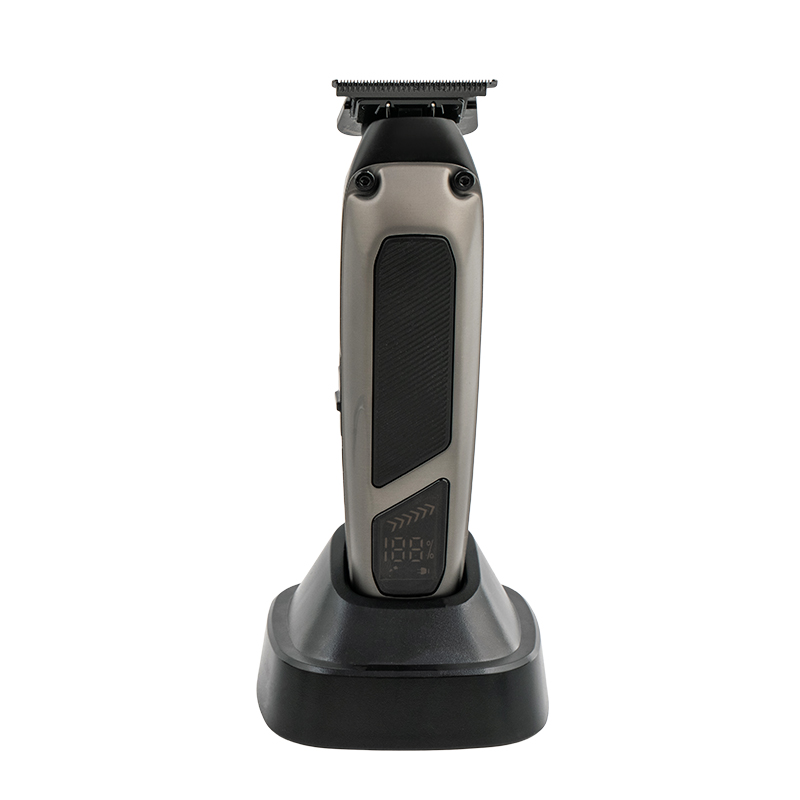
Product: LT-761 Professional Electric hair clippers For Home

+86-574-62151741
+86-13655842900
laituo@google.com
No. 22 Liufang Road, Yuyao Industrial Park, Ningbo City, China
Copyright © Yuyao Laituo Electric Appliance Co., Ltd. All Rights Reserved
OEM/ODM Hair Removal Tool Epilator Manufacturers
